



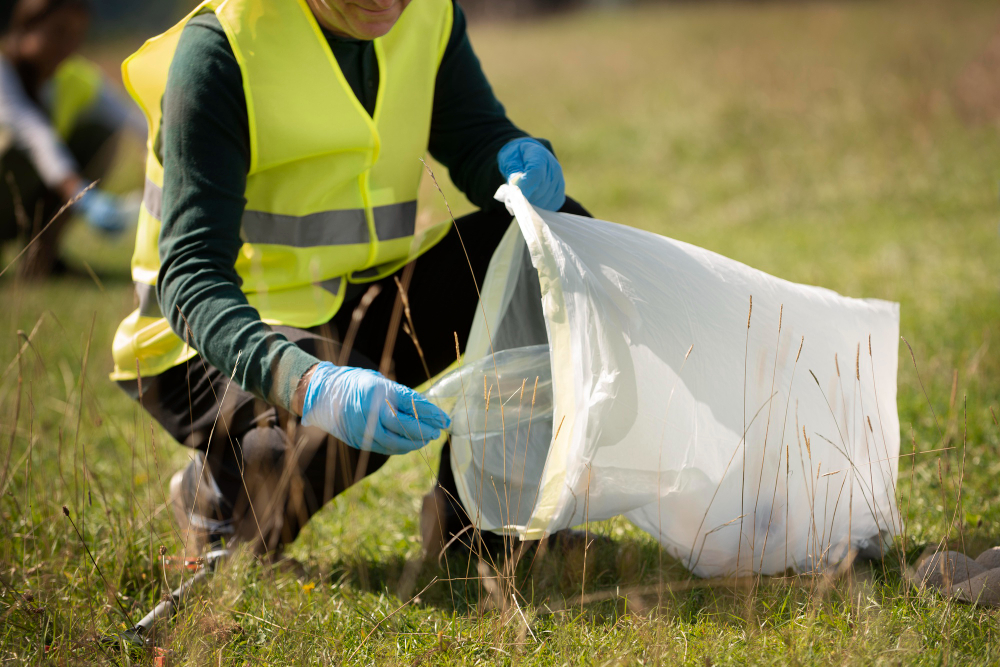
Compostable Garbage Bags: A Practical Guide for UAE Businesses
In the UAE, businesses today are increasingly putting a focus on waste management, sustainability measures and responsible procurement. Large amounts of garbage bags are employed daily by hotels, restaurants, offices and facility-management firms, especially. This has led to many procurement teams looking into alternatives to traditional plastic garbage bags, such as compostable garbage bags.
However, switching products should not be based on appearance or marketing claims alone. The business buyer must be aware of the quality of the bag really being compostable, the differences between compostable and biodegradable products and which size, compostable specification will work for a given application.
Quick Summary
Compostable garbage bags offer UAE businesses a more sustainable alternative to conventional plastic bags. This guide explains how to choose the right compostable bags based on material, certification, size, strength, customization and disposal requirements.
What Makes a Garbage Bag Genuinely Compostable?
The term compostable is not a synonym for ‘environmentally friendly’. The U.S. Environmental Protection Agency (EPA) defines compostable plastics as plastics that “are capable of being decomposed by microorganisms under controlled composting conditions into carbon dioxide, water and biomass (including soil) with no resulting persistent, bioaccumulating or toxic residues. Commercially compostable plastics are typically used in industrial or commercial composting systems, not in the typical backyard composting system.
Common material combinations used in compostable products include:
- PLA (polylactic acid): A bio-based polymer commonly derived from renewable resources.
- PBAT: A biodegradable polymer often blended with other materials to provide flexibility and performance.
- Starch compounds: Plant-based materials, often using sources such as corn or other starch-rich crops.
The key issue for businesses is that a bag does more than just have plant-based material; it must also be made with the material. Before procurement, it is advisable for procurement staff to request technical specifications, relevant certification and clear disposal instructions before approving a product.
Key Takeaway: “Plant-based,” “biodegradable” and “compostable” are not interchangeable claims. Always verify what the product is certified to do and under which conditions.
Compostable vs. Biodegradable: Why the Distinction Matters
“Biodegradable” is a broad term. A material described as biodegradable may break down through biological processes, but the time, environment and conditions required can vary considerably.
Compostability is more specific. EPA defines compostable plastic as plastic that can be broken down under specific composting conditions and that will degrade at a rate that is compatible with the composting process. The EPA also points out that a product labeled as commercially compostable could not be considered to be appropriate for a home compost pile unless the label indicates so.
The UAE has a business distinction to make here since replacing the bag is not enough to make a full sustainable waste-management system. The business should also be aware of how the bags will be collected, sorted and processed after use.
| Factor | Compostable Bags | Biodegradable Bags |
|---|---|---|
| Meaning | Designed to break down under defined composting conditions | Designed to break down biologically |
| Disposal | Usually requires an appropriate composting facility | Depends on the material and disposal environment |
| Certification | Relevant compostability certification should be checked | Certification and degradation claims should be verified |
| Business consideration | Requires suitable waste-management arrangements | Requires understanding of actual degradation conditions |
| Suitable for all waste streams? | No | No |
This is why procurement managers should assess the entire waste-disposal process rather than selecting bags based only on the word “green.”
Choosing the Right Size: 10L/20L vs. 80L/120L
One of the easiest and most crucial decisions when buying is size. A bag that is too small results in overflow and frequent changes. Use of an unnecessarily large bag can lead to excess material and operating costs.
For offices, 10L or 20L bags may be suitable for individual desk bins, washrooms or small waste containers. These applications usually involve lighter waste and relatively low daily volumes.
For hotels, restaurants and facility-management operations, larger 80L or 120L liners may be more appropriate for central waste bins and high-volume collection points. However, capacity should always be matched to the actual container dimensions and expected waste load.
Before placing a bulk order, businesses should consider:
- Bin dimensions and capacity
- Typical waste volume
- Waste type and weight
- Required bag thickness
- Frequency of collection
- Storage space for bulk quantities
- Disposal and composting arrangements
A compostable bags UAE supplier should ideally be able to discuss these requirements rather than simply quoting a price per carton.
Strength and Performance: Can Compostable Bags Handle Commercial Use?
Sustainability is important, but a garbage bag still has to perform its basic function. The commercial buyers should therefore assess the tensile strength, puncture resistance, flexibility, etc. of the seams and ability to bear loads.
Wet food waste could be a problem in restaurants and packaging, housekeeping waste and general refuse at hotels. Multiple specifications may be required for the facility-management companies, as they are responsible for the management of different buildings and waste streams.
Therefore, be cautious when choosing a bag just because it is compostable. Ask for samples and test them in the context in which they will be used.
A practical evaluation can include:
- Filling the bag to its normal operating level.
- Testing it with the expected waste weight.
- Checking the bottom seam for leakage.
- Evaluating whether the bag stretches sufficiently without tearing.
- Testing removal from the bin.
- Checking storage performance under the conditions recommended by the manufacturer.
Super Plast claims to manufacture bags in various sizes, colours, types and thicknesses and specializes in the manufacturing needs of the clients. It also manufactures biodegradable bags and garbage bags.
Certification and Documentation: What Should Businesses Ask For?
Documentation is as crucial as the product in B2B procurement. Request your supplier to provide product certification, technical data sheet, material information and recommended disposal conditions.
The certification should be appropriate to the environmental claim. Businesses should not take the leap of assuming that any sustainability certification equates to all environmental characteristics of a product.
For instance, FSC system is based on responsible forest sourcing and employs chain of custody certification to trace certified material in processing, manufacturing and distribution. The use of FSC certification therefore cannot be considered as an indication of the compostability of a plastic garbage bag per se, but may be relevant to parts of the paper or the forest-based packaging.
When evaluating a compostable bags manufacturer, ask:
- What material is used?
- What compostability standard or certification applies?
- Is the certification applicable to the finished bag?
- Is the product intended for industrial or home composting?
- What waste streams can the bag handle?
- What are the recommended storage conditions?
- What documentation is available for procurement records?
Private-Label and Custom Printing Options
Sustainability may also be a part of the brand experience for distributors, retailers, hospitality and facility-management businesses. With custom printing, companies can incorporate their branding, product details, guidance for disposal, or sustainability statements. Private label manufacturing can also enable a distributor to build his own product line instead of buying a generic product.
Custom manufacturing and the ability to make bags based on customer needs, such as size, specification and design are also a strength for Super Plast. Businesses must ensure that the artwork, bag size, material specification, printing requirements, packaging quantity and minimum order quantity are confirmed before approving a custom production.
How to Request Samples and Start a Bulk Supply Order
The safest approach is to begin with a sample rather than immediately committing to a large shipment.
Start by sharing your requirements with the supplier:
Step 1: Define the application
Explain whether the bags will be used in an office, hotel, restaurant, commercial kitchen, housekeeping operation or facility-management contract.
Step 2: Confirm the size
Provide the bin dimensions or specify the required capacity, such as 10L, 20L, 80L or 120L.
Step 3: Specify performance requirements
Mention the expected waste type, approximate load and whether leakage or puncture resistance is a major concern.
Step 4: Request documentation and samples
Ask for material details, relevant certification and samples for practical testing.
Step 5: Conduct an internal trial
Use the sample under real operating conditions before approving the product.
Step 6: Finalise the bulk order
Once the sample meets expectations, confirm quantity, packaging, printing, delivery schedule and payment terms.
This process reduces the risk of ordering a product that looks suitable on paper but performs poorly in real-world applications.
Procurement Tip: Don’t compare suppliers on price alone. Compare material, certification, size, thickness, strength, customization, delivery capability and after-sales support as well.
Why the Right Supplier Matters
When a company is buying thousands of bags per month, the reliability of the supplier can actually make a difference in the day-to-day operations of the company. Your supplier needs to be able to ensure that the specifications remain the same across a number of bulk orders and that they are able to provide support in the event of requirements changing.
Super Plast is a modern plastic bag manufacturing company based in UAE with an emphasis on quality and bespoke production bags based on customer’s requirements. It can be applied to garbage bags, biodegradable bags and other commercial packaging products.
FAQ
Can compostable garbage bags be placed in normal recycling bins?
Generally, no. The EPA notes that compostable plastics are not intended for conventional plastic recycling streams and can contaminate or disrupt recycling when mixed with other plastics. Businesses should follow local waste-management guidance for their specific product.
Which garbage bag size is best for offices?
Small bins in offices commonly use 10L or 20L bags, depending on the bin dimensions and waste volume. The final selection should be based on the actual container size and expected daily waste rather than capacity alone.
Are compostable bags strong enough for hotels and restaurants?
They can be suitable for commercial applications when the bag specification matches the waste type and load. Businesses should test samples for puncture resistance, seam strength, flexibility and leakage before placing a large order.
Conclusion
Switching from traditional plastic liners to more environmentally friendly alternatives can be a step toward achieving UAE businesses’ environmental goals, but it shouldn’t be for the sake of being labelled ‘green’. There are so many variations—knowledge of compostable vs. biodegradable materials, choosing the right size and strength, checking documentation, and creating a suitable disposal path—are all vital.
For businesses looking for eco-friendly garbage bags Dubai, the best approach is to work with a supplier that can understand commercial requirements and provide suitable specifications, samples and customization options. Super Plast offers a range of environmentally focused bag solutions and client-specific manufacturing capabilities for businesses across the UAE.
Leave a Reply
Recent post
Copyright © 2020 Super Plast Plastic Factory. All Rights Reserved. Developed by Digital Links
Abid
4 Sep 2026
0 Comments